Philosophy · June 2026 · 4 min read
The Quiet Luxury of Restraint
Why the most memorable rooms are often the ones that ask the least of you.
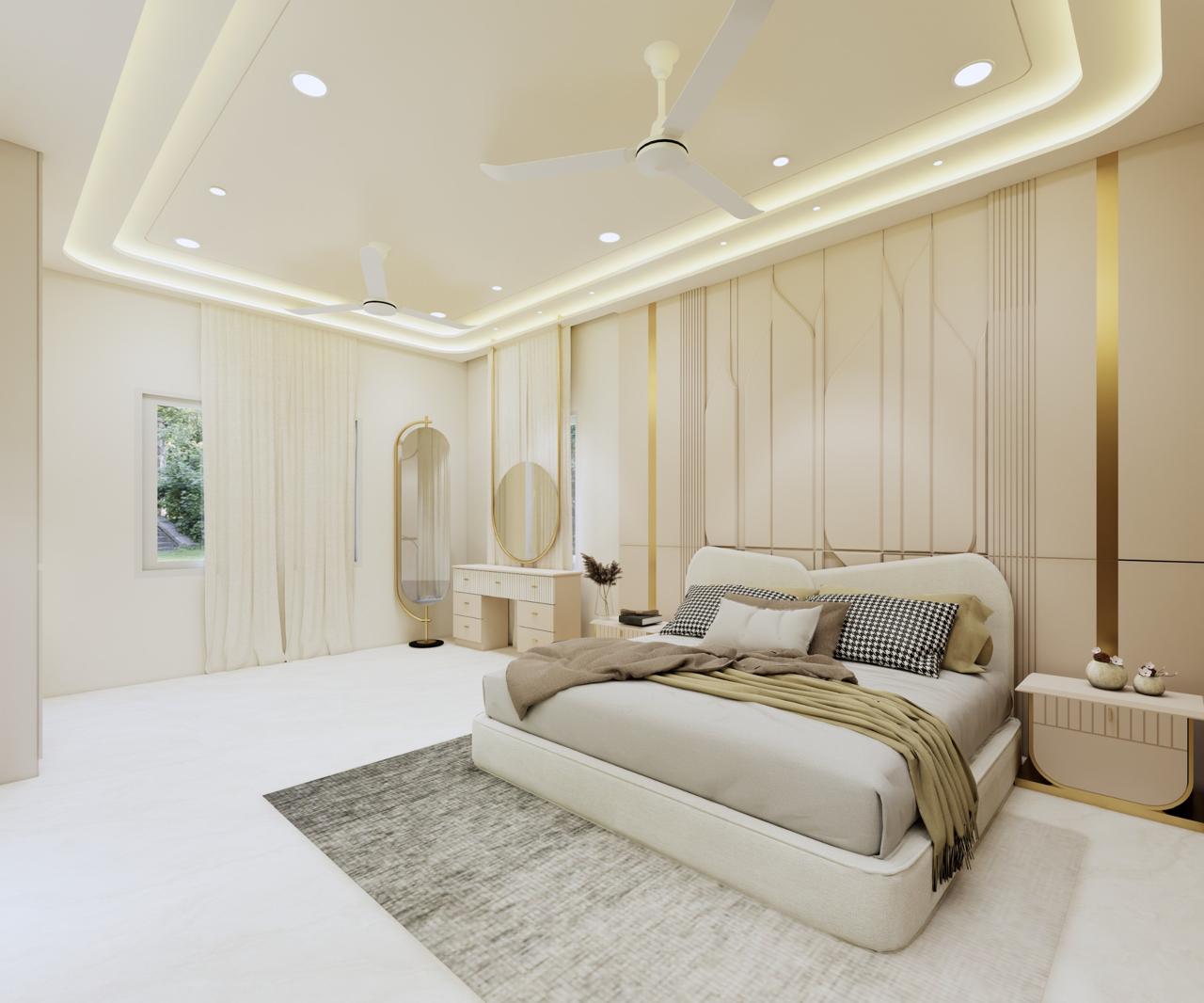
There is a moment we watch for on every handover day. The client walks through the finished home, and somewhere — usually in the quietest room — they slow down. They stop talking. They simply stand there. That silence is the project succeeding.
It is tempting, especially in India's current design climate, to equate luxury with abundance: more veneer, more gold, more drama per square foot. The homes we admire most do the opposite. They hold back. A single fluted wall is given room to breathe. One material is allowed to finish a sentence before the next begins.
Restraint is not the absence of ideas. It is the discipline of choosing one.
In the principal suite of a recent residence, we tested every impulse against a simple rule: if a detail did not serve calm, it did not stay. The palette settled into cream, soft gold and one warm grey. The joinery curves because hands touch it, not because curves photograph well. The result feels inevitable — as though the room could not have been any other way.
Restraint also has a practical kindness to it. Rooms that ask little of you are rooms you can live in for decades. Trends exhaust themselves; a disciplined palette absorbs new objects, new art, new phases of life without breaking. This is what we mean when we say we design for the tenth year, not the first photograph.
The next time you walk into a room that feels expensive, count the ideas in it. Our guess: fewer than you expect, each given the space to matter.
Next Entry