Craft · April 2026 · 5 min read
Materials That Age Well
On patina, honesty, and choosing surfaces for the life they will lead.
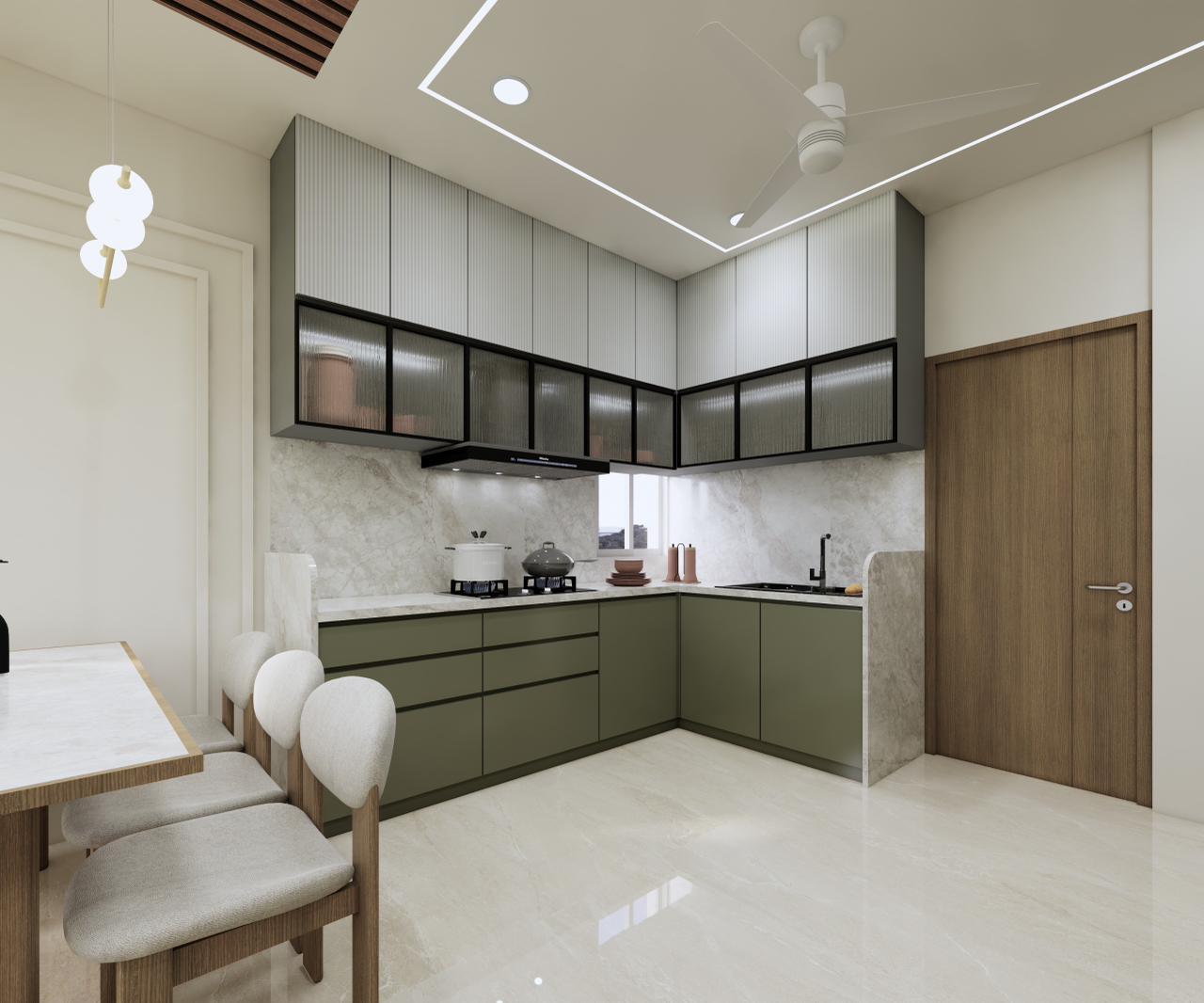
Every material in a home is making you a promise. Laminate promises to look the same until the day it fails. Brass makes a stranger promise: it will change with you — darken where it is held, brighten where it is polished, and record twenty years of one family's habits on its surface.
We think about that second kind of promise constantly, because a home in Gujarat leads a demanding life. Heat, monsoon humidity, a decade of festivals and everyday cooking — surfaces here cannot merely be beautiful in a showroom. They must know how to age.
Patina is a material keeping its promise.
Some of our reliable companions: stone, which wears its small scars with dignity; solid timber and honest veneers, which can be re-oiled and renewed; lime plasters, which soften visually as they cure over years; woven cane and rope, whose slight irregularity forgives daily use. And brass — always brass — which in an Indian home carries generations of association, from temple bells to kitchen vessels.
What we avoid is equally deliberate. High-gloss finishes that show every fingerprint and cannot be repaired, only replaced. Printed textures pretending to be what they are not — a photograph of oak glued to dust-board. Anything whose beauty depends on remaining untouched, because untouchable homes make anxious owners.
There is a question we ask suppliers that surprises them: not "how do we keep this looking new?" but "what does it look like in its tenth monsoon?" If the answer is 'worse', we pass. If the answer is 'different, and rather lovely', it earns a place in the palette.
Choose materials the way you choose people to grow old with — for how they change, not just how they arrive.
Next Entry