Field Notes · February 2026 · 4 min read
Designing for Indian Light
The particular gift, and challenge, of a subcontinental sun.
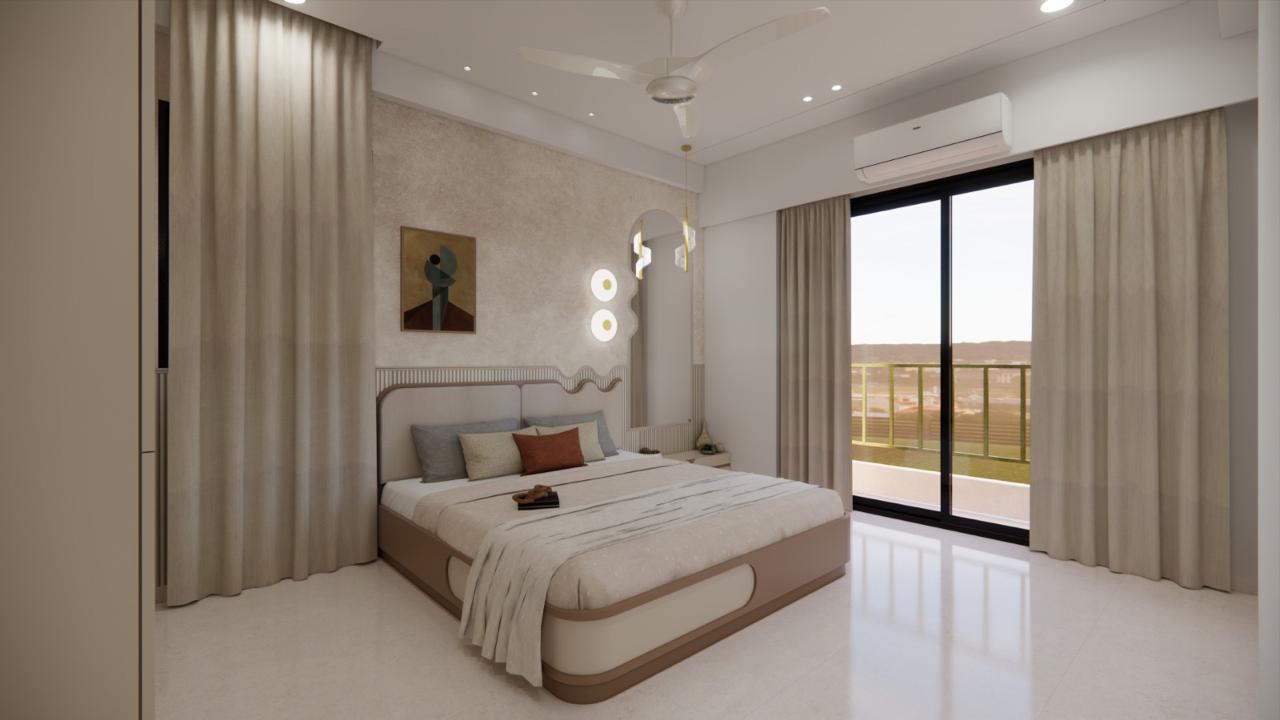
Most of the interiors we grew up admiring in books were designed for weak light. Scandinavian whites, Parisian greys — palettes composed for skies that ration the sun. Vadodara's sky does not ration anything. By ten in the morning, our light is loud, vertical and certain, and it stays that way for most of the year.
Designing here means treating that light as a material — one you are given free, in enormous quantity, and must shape rather than merely admit.
In India, the curtain is not window dressing. It is architecture.
Pure white walls turn harsh under a hard sun; that is why our canvas is warm white, tempered with sand and clay tones that absorb glare instead of bouncing it. Sheer layers do serious work: a double curtain — one diffusing, one blocking — lets a bedroom hold four different moods between dawn and night. Deep window reveals, pergolas and fluted screens do not decorate a window; they slice the light before it ever reaches the room.
Then there is the evening, which Indian homes live for. Rooms that dazzle at noon must know how to become intimate at nine, when the family actually gathers. This is why we light in layers — concealed coves for the architecture, lamps for the people — and why every project leaves the dimmer generously specified.
The reward for taking light seriously is a home that keeps time with the day: bright and industrious in the morning, golden and unhurried by dusk. No imported palette can give you that. It has to be designed here, for this sun.
Next Entry